Excellent interview on a powerful vision for the reinvention of health insurance
http://www.strategy-business.com/article/00324?pg=all
Mark Bertolini’s Preventive Disruption
For Aetna’s CEO, the lauded move to raise employee wages is just part of a broader strategy to adapt to changes in healthcare.
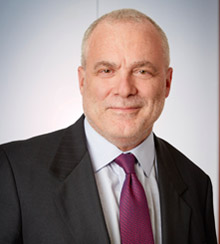
Photograph © 2015 Derek Dudek
Since January 12, 2015, Aetna chairman and CEO Mark Bertolini has been applauded by the likes of the New Yorker and the Wall Street Journal as an uncommonly forward-thinking and compassionate chief executive — or perhaps just a quixotic one. On that day, he announced a raise in Aetna’s minimum wage to US$16 per hour. For the 5,700 employees who stood to benefit, this meant an average pay increase of 11 percent; some saw an increase of 33 percent. It was arguably the most visible wage hike by a chief executive since 1914, when Henry Ford doubled his assembly line workers’ pay to $5 a day.
The Aetna pay hike was a multifaceted and strategic move — and one that stemmed from personal motivations as well. It also showed Bertolini to be a culturally astute leader with a real stake in improving the well-being of people who rely on Aetna, be they customers, employees, or long-term shareholders. He is also keenly aware of the changing nature of the healthcare industry in the U.S. and elsewhere. Even without the 2010 Affordable Care Act, health insurance companies would have been forced to revise their business models. Consumers have far more choices now than they had even a few years ago, and they approach them in a more conscious, more participative way.
Aetna, which as of 2014 was the third-largest health insurance company in the United States (after UnitedHealth and WellPoint), has been shifting its strategic focus, and its cultural orientation, for several decades. It has evolved from its role as a primarily financially oriented payor to a role as a healthcare solutions provider, helping medical organizations, insurance carriers, and consumers operate in harmony at lower cost. This has resulted in significant changes in the company’s prevalent attitudes and behaviors, with more change to come.
Bertolini is the third Aetna chief executive in a row who has moved the company in this direction. The first was Jack Rowe, chairman and CEO from 2000 through 2006, who turned Aetna around from a declining bureaucracy (with a hidebound culture known to employees as “Mother Aetna”) to a profitable enterprise. Rowe’s successor, Ron Williams, CEO and chairman from 2006 to 2010, restructured the company and paved the way for its return to growth at a time of dramatic industry change. Bertolini, a 58-year-old Detroit native who holds an MBA from Cornell University, joined Aetna as head of specialty products in 2003, and became president in 2007. In this post and as CEO, he has overseen Aetna’s business response to the Affordable Care Act, which helped attune him to Aetna’s complex cultural legacy as well as its potential for change.
Interestingly, the wage raise stemmed directly from Bertolini’s efforts to engage the Aetna company culture, through social media and personal interactions. It was also driven by a wish to be considered among the ethical leaders of American companies. Bertolini “explicitly linked the decision to the broader debate about inequality,” wroteNew Yorker columnist James Surowiecki. “He said that it was not ‘fair’ for employees of a [Fortune 100] company to be struggling to make ends meet.” Even Mother Aetna found it hard to undermine the emotional appeal of this rationale.
Bertolini is known for his no-nonsense, energetic style; his ability to mix formal and informal leadership; his advocacy of preventive medicine (after using yoga to recover from a debilitating ski accident in 2004, he introduced it to Aetna employees and ultimately to customers); and his penchant for speaking candidly and off the cuff. In this interview, conducted in two sessions in his Hartford, Conn., offices — the first in August 2014 and the second in January 2015, just after the wage announcement — he spells out the reasons for the pay and benefits change, the reaction it evoked in the company’s culture, and the connection to Aetna’s audacious strategic goal of becoming one of the few payor companies with a profitable and influential leadership position in the emerging healthcare industry.
S+B: How did you come to the wage hike decision?
BERTOLINI: When I took this job as CEO, I had three objectives. One was to set Aetna on a course for the next 160 years. Our purpose should be to become a consumer company. The second was to make healthcare reform actually work. The third was to reestablish the credibility of corporate leadership in the eyes of the American public.
S+B: Not just for Aetna, but for every company?
BERTOLINI: Yes. But at Aetna, this meant having a style of leadership that was approachable, real, and tangible. One of my goals was cultural impact. I told the PR team, “You cannot protect me; you must prepare me. So get ready. I’m going to go out there and speak truthfully, and talk about how to move forward.” That approach has served me well.
“I told the PR team, “You cannot protect me; you must prepare me.”
I became active on social media. We have an internal network called Aetna Connect, and I’m constantly talking to the employees on it. They also talk to each other. More and more often, I saw people online saying, “I can’t afford my benefits. My healthcare coverage is too expensive.”
I heard the same thing in site visits. When I visit an Aetna office, after the town meeting where I speak, I try to go to every cubicle in the building and shake everybody’s hand. I ask them what they’re up to and how they feel about it here. The same message came through.
At the same time, I could see that the economic recovery was unequal. People were suffering, but capital was cheap and corporations were hoarding cash and not investing. Business leaders were saying, “When the government gets its act together, we’ll move forward [with helping low-income wage earners].”
Then Thomas Piketty’s Capital in the Twenty-First Century [Belknap Press, 2014] came out. I know a number of well-known economists, and they all leaned the same way. There is pressure to fix this [income inequality] problem through the law of the land. That was a scary prospect: massive wealth redistribution through the federal government. We needed to prevent that.
Another influence was Clayton Christensen. He and I have been working together since 2011. Clay’s basic idea is that companies should husband scarce resources and put plentiful resources at risk. In our current environment, the scarcest resource is talent: human capital, not financial capital. Companies have cash sitting on balance sheets around the world. It makes more sense to spend the money on people than on acquisitions.
S+B: What did the business leaders within Aetna think?
BERTOLINI: They were also starting to agitate about the income inequality problem. Some of them were worried about turnover, and being able to keep people motivated on the front line. After we had looked at a number of options to help our lowest-paid employees, I finally said, “How about we just pay them more?”
[Aetna chief of staff] Steve Kelmar is my sounding board. When he said the organization was ready to make this kind of change, we got a team together. First, we needed more data. I asked the HR team to build a profile: How much did the lowest-paid people at Aetna make? What did their healthcare coverage look like? What were their out-of-pocket costs? How hard was it for them to get by?
It took months to get this information. The organization really wasn’t ready to talk about it, but I kept pushing. Ultimately, we determined that a raise to $16 per hour would cost us $10.5 million per year. So I asked for data on the business impact. Our accepted figure for turnover costs was $27 million per year, but that was only voluntary turnover. I asked for total turnover costs. How many people leave involuntarily? How much does it cost to hire their replacements? How long does it take to train the new recruits? We looked at absenteeism, rework, productivity, dissatisfied employees, and our net promoter scores [a measure of survey respondents’ enthusiasm] in recruiting new employees. Incidentally, our industry’s general net promoter scores are below those of airlines and cable TV companies.
We figured out that our total turnover costs were $120 million per year. By that measure, $10.5 million looked like a low-risk investment. We [had] also recently hired a new head of human resources to partner with me on doing the right thing.
S+B: How many employees were affected by this policy?
BERTOLINI: About 5,700 employees got wage increases to $16 per hour. Most of them were call center employees; some were single mothers or fathers, and others had children on Medicaid because they couldn’t afford our dependent coverage.
It wasn’t enough to just increase their wages; we also had to do something about their medical benefits. I talked to economists at the Peterson Institute for International Economics, where I’m on the board, and they pointed out that wage increases can affect benefits negatively [by reducing subsidies]. So we reduced the cost sharing on their benefits. This gave many of them our richest benefit plan at the price of our least rich plan — a zero premium cost for many of our frontline employees. Our objective was to raise the personal disposable income [PDI, or income after taxes, benefits, and other withholdings] of this population as high as we could without breaking the bank.
S+B: This wasn’t a cascading measure where you’d also raise other wages through the company.
BERTOLINI: There was a huge gap between the people making $13 to $14 per hour and the rest of the company. People at the next higher salary level didn’t have the same issues.
When we made the change, some people saw a 33 percent increase in wages and a 45 percent increase in PDI. We also added another element to our social compact by offering certain employees enhanced medical benefits based on household income and their commitment to engage in certain wellness programs.
A Proud Moment
S+B: What was the announcement like?
BERTOLINI: I went down to our largest call service center in Jacksonville, Fla., to announce it on January 12. We had to get a hotel ballroom to fit everyone in. Everybody was wondering why I was there. “He’s retiring.” “The company’s been sold.”
Very few people knew in advance. I had given the Wall Street Journal an exclusive interview the week before but embargoed the story until that evening. I wanted the employees to hear about it from me directly. We had also given our top 300 managers a heads-up the day before; we got them on the phone. They said things like “This is the proudest moment I’ve had in 42 years at the company.”
Then I made the announcement, and the place exploded. I had known people would be happy, but I wasn’t ready for the raw emotion. There were people crying. People saying, “Praise the Lord. My prayers have been answered.” The frontline managers were thrilled.
S+B: Were there negative reactions?
BERTOLINI: Some employees said, “Wait a minute. I worked six years to get to $16 per hour and here you are handing it to them. What are you going to do for me?” It was disappointing to hear this.
S+B: How did you deal with cultural resistance?
BERTOLINI: I kept control of [the initiative]. I brought the senior team into it because everyone would have to implement it, but I stayed closely involved myself.
S+B: What was the reaction from the shareholders?
BERTOLINI: They’ve been largely supportive, with many going out of their way to ask about the move and voice their approval. Many of those who were concerned about the potential financial impact quickly became supportive when they came to understand the total magnitude of the enterprise impact, versus the benefits in employee satisfaction and retention.
Of course, all along I’ve been trying to move our shareholder base to long-term investors who will be more supportive of the changes we need to make to succeed in the new healthcare environment.
As Clayton Christensen points out, the shareholder formula in most companies is much too tightly connected to earnings per share. And you know what? Shareholders do not directly benefit from earnings per share increases. They get the difference in the value they bought at versus the value they sell at. What drives that stock price? It’s Wall Street’s belief about whether we have a sustainable product that our customers consistently buy. This is reflected in the P/E ratio.
Aetna’s earnings per share have grown at 15.5 percent for the last five years. But our total shareholder return grew 207 percent [during the same period]. What changed? The P/E. The magic question is: Are your business fundamentals sound enough that you can consistently deliver a product that customers will continue to buy over time? If people believe our business fundamentals are sustainable, it will move the stock price higher. This should be the way we think about it.
S+B: Not many company leaders have that kind of confidence.
BERTOLINI: In the summer of 2009, we missed our plan by $450 million. I was president. I asked [CEO] Ron Williams, “Why haven’t you put a bullet in me?”
He said there were three reasons. “One, you’re running the place, and I can’t get rid of you. Two, you’ve hopped on the problem, and the plans look great. And three, nobody’s ever going to really be successful as a Fortune 100 CEO until he or she faces one of these crises and actually fixes it. So, finish it up and you’ll be the next CEO.”
You always have the opportunity to lead, no matter what your title. I never let the lack of a title get in my way; when I found a leadership vacuum, I’d jump in. When I talk to my direct reports and they say they don’t have the authority to do something, I say, “Here’s a secret: Do it anyway.” They’ll say, “Well, that’s not my job.” I say, “Yeah, it is.”
“I never let the lack of a title get in my way; when I found a leadership vacuum, I’d jump in.”
Culture and Behavior
S+B: You’re the third CEO in a row trying to create a culture of productivity and accountability at Aetna. How do you see those efforts?
BERTOLINI: I don’t think you can create a culture. A culture emerges and evolves slowly over time. It’s a bit like a Petri dish. You hope the conditions are good for the right culture to grow. You try to get as much help as possible from the current cultural situation. Fortunately, it is seldom all good or all bad. At the end of the day, my biggest challenge has been to show the organization that it is necessary to take something apart while it’s successful, in order to make it even better. That is one of the theories of creative destruction.
S+B: What’s an example of the behaviors you’re trying to change?
BERTOLINI: A lot of it has to do with improving accountability. This is a real issue when shifting from a command-and-control organization to an organization where people make important decisions at all levels. But you cannot change that all at once, so you work on a few key behaviors at a time.
One example is the way we manage meetings. In 2008, I added up the number of days I had to spend in major internal meetings. It was 180 out of about 200. We had a staff of 250 people who did nothing but put PowerPoints together for such meetings. So we set a goal of 70 percent less paper, 10 percent fewer meetings, and 50 percent fewer people attending. You should attend only meetings where you’re needed to make a decision, not to learn about [the topics].
“We set a goal of 70 percent less paper, 10 percent fewer meetings, and 50 percent fewer people attending.”
At first, people were upset: “Why am I no longer invited?”
“Well, you were grousing about having to sit in the back row doing emails. Go see a customer instead.”
We just had our monthly results meeting; there were 15 people in the room. Prior to this change, it would have been 80.
S+B: How do these changes affect customers?
BERTOLINI: The healthcare industry is going through yet another major change. It will be a retail business before too long. By 2020, more than 75 million people will be purchasing insurance directly. That’s why Aetna became one of the largest players in Affordable Care Act exchanges — a move that surprised everybody. Those markets are blossoming for us, because people really want safety. They’re not saying, “I can’t wait to get insurance so I can run off to the doctor and spend somebody else’s money.” They’re solid working people trying to take care of their families. I want us to really care about those people.
When I was growing up, my dad worked as a pattern maker in the auto industry. Since the models changed every five years, he only worked six months every year. My mother was a nurse in a pediatrician’s office. That’s how we got our healthcare paid for. Our market is families like that.
The Affordable Care Act will commoditize this industry. That gives companies two options. They can put their thumb in their mouth, cut their costs, and hope they’re the last company standing. Or they can focus on the two or three parts of the business that have the most value, let the rest disappear, and repurpose their businesses accordingly.
We chose the second option — to focus on a critical few elements. So what could we leverage? Where do we have an emotional as well as a rational advantage? One was our reputation with healthcare providers, including hospitals. They think highly of us, and they all want to get in the insurance business, so why don’t we create a franchise kit for them? We built Healthagen [a line of health management, information technology, and related services for healthcare providers]. When we started working on it in 2005, we called it “Health Plan in a Box.”
We also built a clinical capacity exchange called WellMatch, which lets us resell excess capacity in the healthcare system — services like imaging, lab tests, office visits, and flu shots. And we’re making investments in new technologies, like iTriage [a health literacy and self-care app] and Medicity [which has a network of more than 1,000 hospitals, 270,000 healthcare professionals, and 20 regional and statewide health information exchanges connected to it]. Those two acquisitions were not on the market. We went and talked to them and bought them, and they’ve been very successful. But neither acquisition would have been made with a purely financial or data-driven rationale. We did them because we believed in them.
To make this work, we need to be willing to share our intellectual property and our technology. We can even let providers use it for free. If Healthagen technology helps people buy healthcare more intelligently, or gets them to the right doctor, or stops them from having to go to the emergency room, that helps our customers and it helps our business. Aetna’s medical costs in 2014 were over $40 billion. If we can reduce the annual rate of increase in medical costs by 50 basis points, that’s over $200 million of potential incremental underwriting margin.
We have begun to build accountable care organizations (ACOs) for providers. We are helping them evolve from a revenue-based model to margin-based insurance. We hired executive vice president Dijuana Lewis from Walmart, where she ran the healthcare vertical, to create a retail business for these organizations. The other two major parts of the enterprise are Healthagen, the provider-facing business, run by senior executive vice president Joe Zubretsky; and the core institutional business, run by president Karen Rohan, effective January 2015. From the combination of these three units, we are building, in essence, a fundamentally different value proposition in the marketplace; it is a population health model, in which providers get rewarded for keeping people well. Eventually, instead of primarily being a health insurance company, we’ll be like “Intel Inside,” providing the common infrastructure.
A Next-Generation Payor
S+B: What do you need to do to go down that road?
BERTOLINI: First and foremost, we have to make provider relationships work over the long term. For employers to give up their ability to put health benefits directly in employees’ hands, they have to believe that the costs will be sustainable and affordable over time.
The best shot is to get providers engaged in population health. We will need to work with them in a variety of ways: fee-for-service systems, clinical efficiency, avoiding readmissions, and supply chain efficiency. Buying coalitions to lower the prices of drugs, stents, and wheelchairs. Giving them access to capital markets, debt and equity, to build their capacity to meet the needs of the full community. We want to make it easy for them to do the right thing for their customers.
I use Tesla as an analogy. Elon Musk has a car that runs purely on electricity, but it’s constrained by a lithium ion battery that represents 65 percent of the cost, and the car costs $85,000. So he builds a factory to reinvent the battery. If he can get to a $35,000 electric car and if free charging is everywhere, he can turn the energy and automotive industries upside down. Similarly, the healthcare provider system represents 85 percent of our cost. Unless we reinvent that system, we can’t begin to make it a retail proposition.
S+B: What does this change mean for the people of the company?
BERTOLINI: There are three kinds of people at Aetna. There are people who want to operate under the old model, and they probably have five or 10 years left before that model is obsolete. But they are generating the capital that will fund the transition.
A second group is focused on the new stuff. Many of them work at Healthagen, whose offices are in Salt Lake City, Silicon Valley, and Denver. They largely came out of venture capital and private equity. When I go see them, it feels very natural to wear jeans and Birkenstocks or cowboy boots. It’s a completely different style of enterprise and cultural situation.
The third group is people who are involved in the old businesses, and who need help making the transition to the new world. The new model will need a lean operating infrastructure, so we will need to prepare for that. But we’ll also need new kinds of roles. For example, we’ll need to find roles for people in case management, marketing, and other fields where we haven’t needed many people before. Our budget in 2018 for consumer advertising might be 10 times what it is today.
S+B: Does everybody at the company understand the need for change?
BERTOLINI: We’re talking about a lot of change. Some people have been with the company for a long time, and their attitude is: “What are you doing?”
At a leaders’ meeting, one manager said, “Mark, why are we making such significant change? The company has had record earnings, revenue, membership, and stock price.”
I was really surprised by that. I said, “Then all this talk about what’s going on in the marketplace, you believe all of that’s just fake?”
We had just done an employee engagement survey and the lowest scores were from people like those in the room, two levels below me. As you look at the survey results down through the organization, the scores rose again, and the frontline employees were among the most engaged. So I said, “45 percent of the people in this room really don’t want to be here. So why are you here? Why are you wasting your time and mine?”
The dialogue for the next hour was amazing. People talked about how hard it was to change, how they just wanted to do their jobs. At the end, I said, “I really appreciate everyone’s honesty. But I’m not going away. This is going to happen. Look to your left and right and decide. If you want to be here, we want you.”
S+B: How do you find and cultivate the people who are enthusiastic about change?
BERTOLINI: I’m working now with the top 300 people, looking for a group of about 120 who can be informal leaders — people whose influence does not just depend on their position in the hierarchy. That will probably get honed down to a smaller group. Eventually I would like to have a kitchen cabinet of people who are authentic informal leaders drawn from all layers of the company.
I’m also continuing to use social media. I actually write my own tweets [he’s @mtbert]. My most widely recognized exchange on social media was with @PoopStrong [the Twitter handle and website of Arijit Guha, a graduate student at Arizona State University who was diagnosed with stage IV colon cancer, and began fundraising online when the costs of his care exceeded the benefits limit on his Aetna policy — Bertolini intervened directly in his case]. Sadly, Mr. Guha passed away, but we solved the benefits problem, and that was important to a lot of people, inside and outside the organization.
Most people think it’s hard to find the time to manage social media. But people talk to one another. I don’t even need to interject. I just watch it go on. I know I’m going to get attacked at times; people will say unfair things about me. But I think it’s much more efficient than email. I have 7,000 emails in my inbox, and I respond to virtually none of them. But with internal social media, we can create real teams. Eventually I’d like to replace email altogether with social media.
S+B: You have another project called “reinventing capitalism.” What’s involved in that?
BERTOLINI: I am connected with a group of chief executives at Harvard’s Center for Higher Ambition Leadership. [Harvard professor emeritus] Michael Beer wrote a book about it. We started five years ago with five CEOs, and there are now 40 of us. We’re talking about how we can combine social and financial value — and what we need in the way of metrics to create better companies.
At our last meeting, in January 2015, I talked about this wage initiative. There are now 30 other CEOs who want to do something similar. Some of them have started, and it’s already clear they have the same hurdles to overcome. Even in companies where they talk about values and culture all the time, when asked what the lowest-paid group in their workforce looks like, [the staff will] tell you they don’t know and they don’t have the data. You have to learn to persevere with or without data. That’s how you have impact.
AUTHOR PROFILES:
- Jon R. Katzenbach is a senior executive advisor with Strategy& based in New York, and co-leads the Katzenbach Center’s cultural initiatives.
- Gretchen Anderson is a principal with Strategy& and a director of the Katzenbach Center.
- Art Kleiner is editor-in-chief of strategy+business.


