
Category: Population Interventions
Jeff Brenner – final meeting
Met with Jeff Brenner, Medical Director at Camden Coalition of Healthcare Providers.
Learned about him after listening to these freakonomics podcasts:
An eloquent, thoughtful keen student of the history of epidemiology, public health’s political success and a tireless advocate for the underserved communities of Camden, NJ.
Holds a strong, long-term, systems view of change in public health and healthcare.
Currently engaged in a loss-avoidance play as an ACO demonstration site – geographically defined, shared savings project, which has protection from federal anti-trust laws to allow providers to collaborate.
Doubts the claims of most preventive health organisations, on basis of the Medicare Chronic Care Demonstration Project in the 80s where only 3 of 15 corporate participants survived a randomised control trial of preventive interventions after a year.
The game changer in many examples of public health shift are the troubling personal experiences of decision makers.
Emotional, visceral, aesthetic impact.
Tapped into Grenny’s observation about Don Berwick needing to get hospital CEOs to run the analysis of patient harm personally rather than to delegate in order to experience first hand the damage their institutions were doing to their patients.
Examples of AU Health Minister’s personal experience of the harms of tobacco driving the change to plain packaging.
Complex systems are kept in place by:
- goodwill
- money
- tax dollars
- positive media
- These foundations need to be eroded one by one to effect change.
For a venture capitalist, they’ll need a pitch that appeals to their outrage at the lack of evidence or transparency around the way that healthcare works.
For someone on the left, the conversation will need to be nuanced around the human tragedy of chronic disease, and the need for humanity to do better.
Don’t get wedded to the strategy, just the outcome.
There is a 100 year gulf between the way corporations collect and use data, and the way that government uses the same resource.
Analytics allow us to surveil, segment, target and measure interventions, then tell a good story of why things happen.
Dual System Utilizers – healthcare and law enforcement
On the way to the meeting, came up with a name for the concept – the QALYBOND – will grab the domain name.
References
http://www.macfound.org/fellows/886/
- “Bury the Chains” – end of slavery
- “The Children” – civils rights movement
- The fight to roll out covered sewers, welfare reform (fixed by the right)
- Adverse Childhood Event Study – Vince Felitti, KP
RWJF: Starting Early to Teach Healthy Habits
Washington Post: Thiel on anti-aging
http://www.washingtonpost.com/business/on-leadership/peter-thiels-life-goal-to-extend-our-time-on-this-earth/2015/04/03/b7a1779c-4814-11e4-891d-713f052086a0_story.html
Peter Thiel’s quest to find the key to eternal life
By Ariana Eunjung Cha April 3
Peter Thiel, 47, revels in being a contrarian. The billionaire co-founder of PayPal and investor in Facebook has set up a fellowship program that encourages kids to drop out of college, has given millions of dollars to Ron Paul’s PAC and has started an organization dedicated to the world’s first floating city out of reach of any government on Earth. But the idea he’s most passionate about is using technology to extend human life far beyond what it is now and all the biological, societal and philosophical changes that come with that.
He’s funding dozens of scientists through his nonprofit, Breakout Labs, which aims to support early-stage companies that push the boundaries of what’s possible, and directly through personal donations to institutions and individuals.
This interview, one in a series of conversations with Silicon Valley figures who are shaking up philanthropy, has been edited for length and clarity.
Why aging?
I’ve always had this really strong sense that death was a terrible, terrible thing. I think that’s somewhat unusual. Most people end up compartmentalizing, and they are in some weird mode of denial and acceptance about death, but they both have the result of making you very passive.
I prefer to fight it.
Almost every major disease is linked to aging. One in a thousand get cancer after age 30. Nixon declared war on cancer in 1971, and there has been frustratingly slow progress. One-third of people age 85 and older have Alzheimer’s or dementia, and we’re not even motivated to start a war on Alzheimer’s. At the end of the day, we need to do more.
All your philanthropic projects are founded on the idea that there’s something wrong with the way the current system works. What are the challenges you see in biomedical research?
I worry the FDA is too restrictive. Pharmaceutical companies are way too bureaucratic. A tiny fraction of a fraction of a fraction of NIH [National Institutes of Health] spending goes to genuine anti-aging research. The whole thing gets treated like a lottery ticket. Part of the problem is that aging research doesn’t always lend itself to being a great for-profit business, but it’s a very important area for a philanthropic investment.
How is your approach different?
NIH grant-making decisions end up being consensus-oriented, focused on doing things that a peer review committee thinks makes sense. So you end up with a very conservative bias in terms of what gets done.
[On the other hand,] the original DARPA [Defense Advanced Research Projects Agency] was phenomenally successful. You had a guy running it, and he just gave out the money. It was more focused on substance and less on the grant-writing process. That’s the direction we should go. I worry that right now, we have people who are very nimble in the art of writing grants who have squeezed out the more creative.
You’re currently funding Cynthia Kenyon, Aubrey de Grey and a number of other researchers on anti-aging. What was it about these individuals and their work that got your attention?
They think far outside the conventional wisdom and are far more optimistic about what can be done. I think that’s important to motivate the research.
Leon Kass — the physician who was head of the President’s Council on Bioethics from 2001 to 2005 — as well as a number of other prominent historians, philosophers and ethicists have spoken out against radical life extension. Kass, for instance, has argued that it’s just not natural, that we’ll end up losing some of our humanity in the process. What do you think of their concerns?
I believe that evolution is a true account of nature, but I think we should try to escape it or transcend it in our society. What’s true of evolution, I would argue, is true of all of nature. Even basic dental hygiene. If it’s natural for your teeth to start falling out, then you shouldn’t get cavities replaced? In the 19th century, people made the argument that it was natural for childbirth to be painful for women and therefore you shouldn’t have pain medication. I think the nature argument tends to go very wrong. . . . I think it is against human nature not to fight death.
What about the possibility of innovation stagnation? Some argue that if you live forever, you won’t be as motivated to invent new ways of doing this.
That’s the Steve-Jobs-commencement-speech-in-2005 argument — that he was working so hard because he knew he was going to die. I don’t believe that’s true. There are many people who stop trying because they think they don’t have enough time. Because they are 85. But that 85-year-old could have gotten four PhDs from 65 to 85, but he didn’t do it because he didn’t think he had enough time. I think these arguments can go both ways. I think some people could be less motivated. I think a lot of people would be more motivated because they would have more time to accomplish something meaningful and significant.
How long is long enough? Is there an optimal human life span?
I believe if we could enable people to live forever, we should do that. I think this is absolute.
You’re currently funding researchers who are working on a lot of different ways to slow down or even stop aging — a treatment that would work on the cellular or molecular level, regenerative technologies to replace body parts, cybernetics. If scientists are able to come up with a way to extend human life, how do think it will work?
It will be very multi-pronged. I don’t think the answer will be a single pill. I think there will be a series of regenerative technologies and a series of cures for various diseases. I think it’s probably a combination of those two that will be the most critical. Then there are a few problems that will probably require a different approach — like how do you avoid decay of the brain over time.
What does the future look like if everyone lives to be, say, 150?
Certainly if we could just live to all be 100, that would be quite a transformation. There is good news and bad news. The bad news is: If you don’t believe in the good news, you’re not saving enough for retirement and likely to spend much of your old age in poverty. I suspect if people live a lot longer they would be retired for a somewhat longer period of time. Just the financial planning takes on a very different character.
I think you have far more generations in a family. People would have great-great-great-grandchildren in ways I think quite rare today. I think if you had a much longer life span, I do think the question of the future becomes more important. What would the 22nd-century world look like?
[In terms of careers,] I think you could, for example, become a teacher and then you could become a writer, and then you could become a doctor. Those are completely different professional lives. If someone tries to do all these things now, that is generally seen as kind of a really confused person who doesn’t know what they are doing. But in the future, there is a way in which you might be able to have these really divergent careers. Or maybe you could have something new — a combination of those three.
So would you say you have an optimistic view of the future? Are there particular books, TV shows or other things that influenced your outlook?
There is a sort of genre of optimistic science fiction that I like, and I don’t think there is enough of. One of my favorites is a relatively short story by Arthur C. Clarke, “The City and the Stars.” It’s set in this far future on Earth in this somewhat static society and trying to break out. There is a sense we are just at the beginning of this infinite journey. . . . I was a fan of the original “Battlestar Galactica” and watched a few of the remake ones, and it was so much more negative than the original. The Cylons were the enemies, and it was generally a bad tech experience. I much prefer the original.
What about you? What would you do with the rest of your life if you knew you would live that long? Would you want to be a rock star or take up professional golf or something like that?
I’m not sure . . . but I would be tempted to go back into some specific technical research area where I would just work on really understanding some area of science. I always have the sense that I don’t have enough time to learn about all the things I want to learn about.
Assuming the breakthrough in eternal life doesn’t come in our lifetime, what do you hope to have achieved through your philanthropy before you die? What would you like to be remembered for?
I think if we made some real progress on the aging thing, I think that would be an incredible legacy to have. I have been fortunate with my business successes, so I would like to encourage, coordinate and help finance the many great scientists and entrepreneurs that will help bring about the technological future. It’s sort of not important for me to get credit for the specific discoveries, but if I can act as a supporter, mentor and financier, I think that feels like the right thing.
Disney breaks with Happy Meals in 2006 – an abberation
I was told at dinner last night that the Institute for the Future had recently persuaded Disney to dissociate itself from McDonalds on account of the downstream legal exposure they would incur due to McDonald’s targeting of children (an initiative that will cost Disney $800M p.a. and 5000 jobs), with Disney now searching for a more upstanding dining partner. I haven’t been able to corroborate the information and it doesn’t seem public, but did sound like it was heading in the right direction.
http://articles.latimes.com/print/2006/may/08/entertainment/et-mcdonalds8
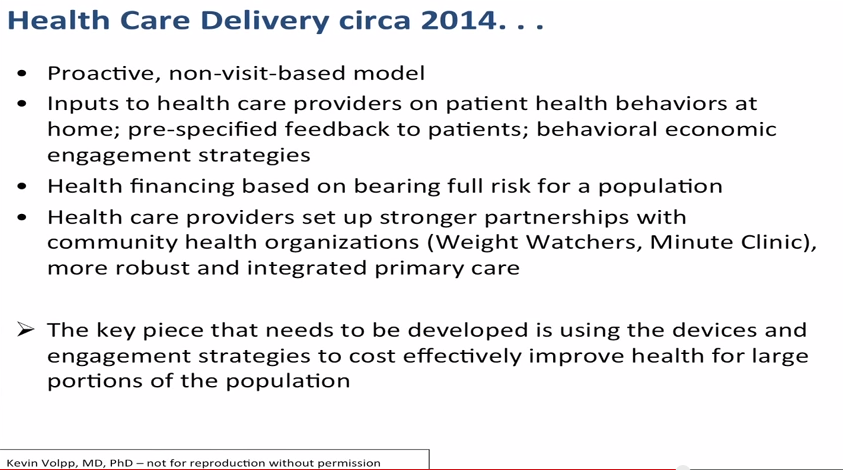
Kevin Volpp: Behavioral Economics and Automated Hovering
RAND: Santa Monica Wellbeing Project
http://wellbeing.smgov.net/
Click here to read more about each panelist, including:
- Saamah Abdallah, New Economics Foundation
- James Anderson, Bloomberg Philanthropies
- Sarah Burd-Sharps, Measure of America
- Anita Chandra, RAND Corporation
- Elizabeth Cox, New Economics Foundation
- Lew Daly, Demos
- Nancy Etcoff, Harvard and Massachusetts General Hospital
- Carol Graham, Brookings Institution
- Jon Hall, United Nations Development Program
- John Helliwell, University of British Columbia
- Tim Kasser, Knox College
- Ewen McKinnon & Lisa Ollerhead, Cabinet Office, UK
- Lori Nathanson, Yale Center for Emotional Intelligence
- Gwyther Rees, University of York
- Gus Speth, Vermont Law School
- Arthur Stone, University of Southern California
- Mathis Wackernagel, Global Footprint Network
- Benjamin Warner, Jacksonville Community Council Inc.
- Liz Zeidler, Happy City Initiative, Bristol
Also the New Economics Foundation – economics as if people and the planet mattered.
http://www.neweconomics.org/teams/entry/Well-being
http://www.rand.org/blog/2015/04/wellbeing-project-to-weave-science-into-government.html

COMMENTARY
(Santa Monica Daily Press)
April 29, 2015
Wellbeing Project to Weave Science Into Government Decisions
Photo by paylessimages/Fotolia
Today the City of Santa Monica is releasing the initial findings of a robust research project that aims to measure the wellbeing of Santa Monica’s residents. The findings will serve as a baseline for how the community is doing now so that wellbeing can be tracked on an ongoing basis. While important, the findings that are being released are only a small part of Santa Monica’s Wellbeing Project. The project is working to fundamentally change how the government thinks about its citizens, by integrating the science of wellbeing into its very foundation.
But what is wellbeing? Are we saying that Santa Monica is measuring how happy people are? Certainly that is a factor, but wellbeing is much more than only happiness or wellness. Wellbeing is about individuals having the skills and opportunity to live a meaningful life. There are countless things that cities do that either contribute or detract from that sense of meaning. The Wellbeing Project is about collecting data on a range of factors, linking across findings, and then translating these findings into action.
Santa Monica is the first to more fully relate both the subjective and personal experiences of its residents to specific conditions that support or detract from wellbeing. That is groundbreaking. In other words, Santa Monica and its partners have identified specific, measurable conditions that directly influence personal and subjective wellbeing. To do this, several dimensions of the wellbeing experience were identified including the social, physical and economic environment. Once these dimensions were defined, the city collected and examined a range of data across agencies and sectors at the city level, as well as through resident survey and social media, in order to create a baseline of wellbeing in the community.
Creating a baseline of wellbeing for Santa Monica required unprecedented examination of what data the city currently collects. This motivated a real examination of whether current city data systems support the ongoing monitoring and evaluation of wellbeing, and whether the volumes of data that cities often collect have the signal value to inform policies and programs that actually promote wellbeing. While cities collect data all the time, a full examination of how disparate sources of data connect and how it can be used to inform government decisions that support wellbeing is novel.
The important distinction of the city’s efforts is the difference between data, information and insight. Collecting immense amounts of data does not automatically lead to information. The data must be analyzed and distilled into something translatable and consumable. Additionally, information alone does little good unless the city can learn from the findings and take action upon them.
This initial findings release is only the beginning. Now the city is enhancing the conversation about how government, its partners, and the community work together to cultivate a community that thrives and flourishes. And the city is examining whether it has the data organizational culture, and concurrent governance structure it needs for wellbeing decision-making. We now have the framework in place to propel the city into action, so that Santa Monica can lead the charge in examining the roles and responsibilities of the city government in the 21st Century.
Anita Chandra is a senior policy researcher and director of RAND Justice, Infrastructure, and Environment at the nonprofit, nonpartisan RAND Corporation.
This commentary originally appeared on Santa Monica Daily Press on April 28, 2015.
Health Evolution Summit – Overview
http://www.healthevolutionsummit.com/Default.aspx?PageID=16199729
1:00 pm – 2:15 pm
Pre-Summit Sessions (concurrent)
CEOs of leading providers/payers share their outlook on their critical innovation priorities and highlight respective approaches to vet solutions. A variety of provider/payer executives then connect with innovative CEOs from relevant service, IT and product companies to learn about new solutions and provide insights on the solutions’ value to the market.
Pavillions IV & V
Payer Connect: Where payer executives and innovative CEOs meet
Select health plan CEOs will share their strategic forecasts and the critical innovations necessary to remain competitive in a dynamic market. Payer executives and CEOs of relevant health service, IT and product companies will network briefly to share ideas and make a plan to reconnect pending mutual benefit.
Moderator:
Mike Gaffney, Co-Founder and Managing Director, EDG Partners
Speakers:
Dan Hilferty, President and CEO, Independence Blue Cross
Steve S. Martin, President and CEO, Blue Cross and Blue Shield of Nebraska, Summit Chair
Networking tables will be hosted by:
Aetna – Bjorn Thaler, VP, Head of Corporate Development
Blue Cross & Blue Shield of Nebraska – Steve S. Martin, CEO and Lew Trowbridge, President and Chief Operating Officer
Blue Cross & Blue Shield of North Carolina – Andy Brynes, VP, Strategic Development, Mosaic Health Solutions
Cambia Health Solutions – Ben Albert, Operating Partner, Rob Coppedge, SVP Strategic Investment & Corporate Development
Highmark Health – Nanette DeTurk, EVP, Chief Administrative and Strategy Officer and Treasurer
Independence Blue Cross – Terry Booker, VP of Corporate Development and Innovation, and Tom Olenzak, Managing Director Strategic Innovation Portfolio
Salons I & II
Provider Connect: Where provider executives and innovative CEOs meet
Select provider CEOs will share their strategic forecasts and the critical innovations necessary for their organizations to remain relevant and competitive. Provider executives and CEOs of relevant health service, IT and product companies will briefly network to share ideas and make a plan to reconnect pending mutual benefit.
Moderator:
Robert Wah, MD, Chief Medical Officer, CSC; President, AMA
Speakers:
John Brooks, President and CEO, Joslin Diabetes Center
John D. Doyle, President and CEO, Ascension Holdings
Michael Wagner, MD, FACP, President and CEO, Tufts Medical Center
Networking tables will be hosted by:
Dignity Health – Richard Roth, Chief Strategic Innovation Officer
Hospital Corporation of America – Chip Blaufuss, AVP of Strategic Innovation
Kaiser Permanente – Chris Stenzel, VP of Business Development and Innovation
Stanford Health Care – Kash Kapadia, VP and General Manager, Digital Health
Sutter Health – Peter Anderson, Chief Strategy Officer
Swedish Medical Group – Ralph Pascualy, Chief Executive
2:15 pm – 3:15 pm
The Monarch Bay Sunset Terrace
The Monarch Bay Sunset Terrace
Alumni Reception
Before the Summit begins, relax and reconnect with fellow alumni. All Summit alumni welcome to attend.
2:15 pm – 3:15 pm
Monarch Pool Terrace
Monarch Pool Terrace
First-Time Participant Welcome
Meet fellow first-time Summit participants. All first-time Summit participants welcome.
General Session: Emerging (and Decaying) Models
The Summit explores the macro implications of emerging (and decaying) models in health and the micro implications that flow from them through a lens that cuts across traditional industry lines of health care services, health IT and life science. Sessions explore the economic underbelly of big issues in search of sustainable business models, directional opportunities and Beachheads.
3:30 pm – 3:45 pm
Salons III & IV
Salons III & IV
Opening Comments
Patrick Geraghty, Chairman and CEO, GuideWell and Florida Blue, Summit Chair
Ann H. Lamont, Managing Partner, Oak HC/FT Partners, Summit Innovation Chair
Charlie Martin, Chairman and CEO, Martin Ventures
Julie Murchinson, CEO, Health Evolution Summit
3:45 pm – 4:30 pm
Salons III & IV
Salons III & IV
A Perspective with Steve Hemsley
Interviewer:
Todd Cozzens, Partner, Sequoia Capital, Summit Innovation Chair
Speaker:
Steve Hemsley, CEO, UnitedHealth Group
4:30 pm – 5:20 pm
Salons III & IV
Salons III & IV
Building the Business Case for High-Priced Therapeutics
Specialty drugs in the U.S. now comprise more than 25% of total pharmaceutical spend and the annual cost per patient can be as high as $100,000 per year. By 2020, the cost of specialty drugs is projected to quadruple and cost the nation more than $400 billion. Is the high-priced approach the new business model for innovation? Are there economically rational reimbursement approaches for certain high-costs diseases? Leaders with high stakes in the game will explore these trade-offs, emerging approaches and financing mechanisms.
Moderator:
Arnold Milstein, MD, MPH, Professor of Medicine, Director of Clinical Excellence Research Center, Stanford University
Speakers:
Joshua Ofman, MD, MSHS, SVP, Global Value and Access and Policy, Amgen
Tim Wentworth, President, Express Scripts
5:20 pm – 6:00 pm
Salons III & IV
Salons III & IV
The Consumer-Engaged Enterprise
To both attract and retain customers, even the most well-established, integrated delivery networks are striving to re-engineer their approach to consumer-centric convenience and service. Meanwhile, newer companies are striving to demonstrate an entirely new level of consumer experience with tools and delivery models that speak to consumer interests. Hear from an established integrated delivery system and a novel primary care model on what is working and where they are headed.
Moderator:
Brad Fluegel, Chief Strategy and Business, Development Officer, Walgreens Boots Alliance,Summit Partner Committee
Speakers:
Rushika Fernandopulle, MD, MPP, CEO and Co-Founder, Iora Health
Glenn D. Steele Jr., MD, PhD, President and CEO, Geisinger Health System
6:00 pm – 9:00 pm
Dana Lawn
Dana Lawn
Welcome Event
Dinner served
9:00 pm – 11:00 pm
The Terrace Salon Balcony
The Terrace Salon Balcony
Après Dessert and Digestifs
APRIL
30
THURSDAY
6:00 am – 7:00 am
The Gazebo
The Gazebo
Morning Fitness Boost
Summit Run, hosted by HealthLine
7:00 am – 6:00 pm
Salon Foyer
Salon Foyer
Registration Open
7:00 am – 8:00 am
The Monarch Bay Courtyard
The Monarch Bay Courtyard
Breakfast
7:00 am – 8:00 am
Salon I
Salon I
Breakfast Session
Profitable Innovation: Invention, Commercialization, Execution
Facilitated by Dentons
Facilitated by: Bruce Fried, Partner, Dentons with panelists: Ronald Kuerbitz, CEO, Fresenius Medical Care North America and Ed Dougherty, Principal, Dentons
Senior executives in every sector of the industry are charged with delivering value. Some need to shorten time to market, others need to produce near term ROI, and others still need to deliver quality healthcare services and improve treatment outcomes in an increasingly price-sensitive environment.
On the eve of the Kentucky Derby, we award the ‘Triple Crown’ to healthcare executives, whose success depends on winning multiple races: being responsive to investors, compliant with regulators and innovators, and delivering affordable, high quality products and services for providers and patients. This session will discuss keys to winning the healthcare triple crown including a baseline model, synthesizing the global clinical and business literature, and testing this model against panelist and audience experience and expertise. Participants will leave with a framework within which to test concepts presented throughout the Summit against the real opportunities and constraints of the business of healthcare.
General Session: Emerging (and Decaying) Models
8:00 am – 9:00 am
Salons III & IV
Salons III & IV
The CMS Perspective: Where Do We Go From Here?
Interviewer:
Bruce Bodaken, Visiting Scholar, Brookings Institution and former Chairman and CEO, Blue Shield of California, Summit Chair
Speaker:
Andy Slavitt, Acting Administrator, Centers for Medicare & Medicaid
9:00 am – 10:00 am
Salons III & IV
Salons III & IV
The Real Deal: Taking on High-Cost, Complex Patients at Scale
Despite challenges, we are seeing an incredible wave of new solutions in caring for populations with multiple chronic diseases, more significant behavioral health issues and complex social situations. Many suspect these solutions will have even more opportunities ahead as they transform individual care. Hear payer, investor and innovator perspectives on what can really be achieved and what new opportunities have yet to be tackled.
Introducer:
Guy Eiferman, Senior Vice President, Strategic Planning and Managing Director, Healthcare Services and Solutions, Merck
Moderator:
Mark D. Smith, MD, MBA, Founding President, California HealthCare Foundation, Summit Chair
Speakers:
Adam Boehler, CEO, Landmark Health
Jay M. Gellert, President and CEO, Health Net, Inc.
Leeba Lessin, President and CEO, CareMore Health System
Thomas A. Scully, General Partner, Welsh, Carson, Anderson & Stowe
10:00 am – 10:30 am
The Monarch Bay Courtyard
The Monarch Bay Courtyard
Morning Break
10:30 am – 11:20 am
Salons III & IV
Salons III & IV
Size Matters: New Approaches to National Provider Brands
Even the most notable regional systems face a growth dilemma, causing some to explore innovative approaches to national expansion, unburdened by brick-and-mortar models. Cleveland Clinic and DaVita HealthCare Partners are on the forefront of these efforts, and others are not far behind. How are best-of-breed providers thinking about scale, how are they ensuring quality and how will they avoid obstacles seen in past waves?
Introducer:
Kris Joshi, PhD, Executive VP, Products, Emdeon
Moderator:
Michael E. Chernew, PhD, Leonard D. Schaeffer Professor of Health Care Policy and Director, Healthcare Markets and Regulation Lab, Harvard Medical School
Speakers:
Toby Cosgrove, MD, President and CEO, Cleveland Clinic
Kent Thiry, Co-Chairman and CEO, DaVita HealthCare Partners
11:30 am – 12:30 pm
Deep Dive Sessions
Salons II
What the Consumer Really Wants: Data Insights into Purchasing Behavior
Hosted by Aon
Facilitated by Matt Levin, EVP and Head of Global Strategy, Aon and Janet Faircloth, SVP, Strategy and Solutions, Aon
Pavilion I
Big Brains on the Internet of Things (IoT)
Hosted by Box
Facilitated by Aneesh Chopra, former CTO, White House, President Obama with panelists: Aaron Levie, CEO, Box; Lee Shapiro, former President, Allscripts and Bill Russell, CIO, St. Joseph Health System
Salon I
Transparency of Cost and Quality: Changing Consumer Behavior at Scale?
Hosted by Emdeon
Facilitated by Doug Ghertner, President, Change Healthcare and Jason Gorevic, CEO, Teladoc
The Plaza
The Next Holy Grail: Strategic Cost Control
Hosted by Healthagen
Facilitated by Charles Kennedy, MD, Chief Population Health Officer, Healthagen
12:30 pm – 2:00 pm
The Monarch Bay Courtyard
The Monarch Bay Courtyard
2:00 pm – 2:50 pm
Salons III & IV
Salons III & IV
Harnessing the Reality of End-of-Life
End-of-life care accounted for over 28% of Medicare’s budget—or $170B spent in the last six months of life for Medicare beneficiaries alone. According to the Institute of Medicine, enhancing the quality of medical and social services at the end of life would create substantial progress toward a sustainable U.S. health care system. Now more than ever, end-of-life services are becoming a strategic industry priority. Two prominent payers and a health system leader will discuss the most critical issues, where best economics are emerging and potential models for advancing management of end-of-life care.
Moderator:
Alexandra Drane, Co-Founder and Chair of the Board, Eliza Corporation; Co-Founder, Engage with Grace
Speakers:
Mark B. Ganz, President and CEO, Cambia Health Solutions, Summit Chair
Wright R. Lassiter, III, President, Henry Ford Health System
Harold L. Paz, MD, MS, EVP and Chief Medical Officer, Aetna
3:00 pm – 4:00 pm
Deep Dive Sessions
Pavilion I
Busting Myths about the 50+: Tracking that Works
Hosted by AARP
Facilitated by Jody Holtzman, SVP Thought Leadership, AARP, with presenter Brad Fain, Principal Research Scientist, Head of the Human Systems Engineering Branch, Georgia Tech Research Institute and panelist Julio Corredor, Director, Worldwide Innovation
Salon I
The Complexities of Patient Financial Responsibility
Hosted by Availity
Facilitated by Russ Thomas, CEO, Availity with panelists; Alan Levine, CEO, Mountain States Health Alliance, Rob Coppedge, SVP Strategic Investment and Corporate Development, Cambia Health Solutions, and Sam Khashman, President and CEO, Imagine Software
The Plaza
Agile Health – New Models of Care Need New Models of IT
Hosted by CSC
Facilitated by Robert Wah, MD, Chief Medical Officer, CSC, and President of the AMA and Lisa Pettigrew, Industry General Manager, Global Healthcare, CSC
Salon II
Zip Code-Driven Health Insights…More Informative than Genetic Code?
Hosted by Optum
Facilitated by Paul Bleicher, MD, PhD, CEO, Optum Labs, and Dave Dickinson, Chief Innovation Officer, Optum Labs
4:00 pm – 6:00 pm
The Monarch Bay Courtyard
The Monarch Bay Courtyard
Afternoon Break
4:15 pm – 5:15 pm
The Terrace Salon
The Terrace Salon
Confab of Women Building Impactful Companies
Join an unmoderated discussion among female healthcare leaders focused on what it takes to build strong teams, how to bring out the best “male” and “female” traits, what “female” traits provide distinct advantages, and what women are getting it done and why.
Speakers:
Gail Boudreaux, Former CEO, UnitedHealthcare
Alexandra Drane, Co-Founder and Chair of the Board, Eliza Corporation; Co-Founder, Engage with Grace
Ann H. Lamont, Managing Partner, Oak HC/FT Partners, Summit Innovation Chair
Lisa Suennen, Managing Partner, Venture Valkyr
6:00 pm – 7:00 pm
Pacific Promenade Lawn
Pacific Promenade Lawn
Global Health Reception
7:00 pm – 9:00 pm
The Pacific Promenade
The Pacific Promenade
The Big Dinner
Global Disease: How New Investment Priorities Are Changing the Landscape
As the Bill & Melinda Gates Foundation works with its partners to transform lives in developing countries, they are acutely focused on tapping into the talent and resources of the private sector. If Ebola taught us anything, low-cost, sustainable solutions need to be created and delivered to ensure not only local and global health, but also economic viability for all. Enter stage left…opportunity. Sue Desmond-Hellmann will share the business case for the global frontier.
Introducer:
Robert Margolis, MD, CEO Emeritus, HealthCare Partners, Summit Chair
Interviewer:
David Brailer, MD, PhD, Managing Partner and CEO, Health Evolution Partners; Chairman, Health Evolution Summit
Speaker:
Sue Desmond-Hellmann, MD, CEO, Bill & Melinda Gates Foundation
9:00 pm – 11:00 pm
The Plaza
The Plaza
Après
Blackjack and poker overlooking the Pacific.
MAY
01
FRIDAY
7:00 am – 12:00 pm
Salon Foyer
Salon Foyer
Registration Open
7:00 am – 8:00 am
The Monarch Bay Courtyard
The Monarch Bay Courtyard
Breakfast
General Session: Disruptive Models
Disruption is happening in pockets, at varying paces and in a variety of ways. In 2015, the Summit explores where new innovations are seeing landfall and the army of others just behind.
8:00 am – 9:00 am
Salons III & IV
Salons III & IV
Moon Shots on Health
Moon Shots – big thinking and aiming for breakthroughs instead of incremental improvements – this is the Google[x] mandate. Google has disrupted just about everything we can think of, so what are they up to in health? Will they be the creator or a potential competitor? The former head of the largest health plan in the country shares her perspectives on moon shots…potential profiles, obstacles and how the practical realities of the past may be shifting. Together, this session will raise the stakes and foreshadow areas where we see breakthroughs instead of barriers.
Moderator:
Peter Neupert, Operating Partner, Health Evolution Partners and Former Corporate VP, Microsoft Health Solutions Group, Summit Chair
Speakers:
Gail Boudreaux, Former CEO, UnitedHealthcare
Andy Conrad, PhD, Head of Life Sciences, Google
9:00 am – 9:30 am
Salons III & IV
Salons III & IV
Consumer On Ramps – Disruptive Models Creating Value
As health care endeavors to engage consumers in their health, some companies are also beginning to create efficiencies, support evolving reimbursement streams and position for value creation. From searching for health information to being monitored remotely; from the healthy consumer to those managing chronic disease or facing acute conditions—the early adopters are contributing to the new health economy. This session will highlight a few innovators disrupting information flow and creating value through the holy grail of the consumer engagement.
Moderator:
Brandon H. Hull, Managing General Partner, Cardinal Partners, Summit Innovation Chair
Speakers:
Eric Rock, CEO, Vivify Health
Ben Wolin, CEO and Co-Founder, Everyday Health
9:30 am – 10:25 am
Salons III & IV
Salons III & IV
Corporate Venture Takes Hold of Health Care
Creating a corporate venture group is certainly one of the hippest strategies to hit the health industry in years. And while these ventures all hope to capitalize on the next biggest disruption to hit the market, they will not all look the same in their pursuits. Hear what disruptive models are on the horizon, what factors are being considered and what you can expect.
Introducer:
Mark Speers, Partner and Managing Director, Health Advances, LLC
Moderator:
Lisa Suennen, Managing Partner, Venture Valkyrie
Speakers:
Rob Coppedge, SVP Strategic Investment and Corporate Development, Cambia Health Solutions
Dave Schulte, Managing Director, Kaiser Permanente Ventures
David Stevenson, Managing Director, Global Health Innovation Fund, Merck
Rafael Torres, Head of Healthcare, GE Ventures
10:25 am – 10:30 am
Salons III & IV
Salons III & IV
Comments and Transition to Innovation Activities
Julie Murchinson, CEO, Health Evolution Summit
10:45 am – 1:00 pm
The Plaza
The Plaza
Corporate Venture Action Group
Innovation Activities (concurrent)
Innovators and health leaders roll up their sleeves in an intimate and interactive setting to explore opportunities.
10:40 am – 11:40 am
Salon I
Salon I
Innovations with Traction: Straight Talk from Customer CEOs
Patient retention and new patient acquisition have always been strategic imperatives, but their importance has risen to mission critical in the transition from fee-for-service to fee-for-value. While these areas may have great impact on both risk of lost revenue and new growth opportunities, they have not been easy problems to solve—and several innovative solutions have stalled. A leading health system CEO talks with innovators about the range of challenges health systems are facing, the approach that different companies are taking and the successes that organizations are experiencing to ensure true value is realized.
Facilitator:
Roy Smythe, MD, Chief Medical Officer, AVIA
Speaker:
Rodney F. Hochman, MD, President and CEO, Providence Health & Services
Innovators:
Mark Hefner, CEO, Infina Connect Healthcare Systems
Oran Muduroglu, CEO, Medicalis
10:40 am – 11:40 am
Pavilion II
Pavilion II
Disruption in Progress: Designing for the Consumer
Innovators and health care leaders on the consumer front lines retreat to the boardroom to explore how best to design for the consumer. Innovators are encouraged to roll up their sleeves in this intimate discussion exploring critical needs, while potential payer, provider and retailer customers help to inform design and their approach.
Facilitator:
Joshua Riff, SVP, Consumer Products, Optum
Contributors:
Rushika Fernandopulle, MD, MPP, CEO and Co-Founder, Iora Health
Jeffrey Kang, SVP, Health and Wellness, Services and Solutions, Walgreens Boots Alliance
Tej Shah, SVP, Business Development, Blue Cross Blue Shield of Louisiana
10:40 am – 11:40 am
Pavilion III
Pavilion III
Disruption in Progress: Where Life Science Is Headed:
Opportunities Beyond the Pill
Innovators and life science leaders retreat to the boardroom to explore new opportunities beyond the pill. Innovators are encouraged to roll up their sleeves in this intimate discussion exploring critical needs, while potential pharma, biotech and medical device customers inform their solutions and their approach.
Facilitator:
Naomi Fried, PhD, VP of Innovation, Medical Information and External Partnerships, Biogenidec
Contributors:
Guy Eiferman, SVP, Strategic Planning and Managing Director, Healthcare Services and Solutions, Merck
Diego Miralles, MD, Global Head of Innovation, Janssen Pharmaceuticals, Johnson & Johnson
Pascale Witz, EVP, Global Divisions and Strategic Development, Sanofi
11:45 am – 12:45 pm
Pavilion IV
Pavilion IV
Disruption in Progress: Care Delivery Innovation
Innovators and health care leaders on the front lines of care delivery retreat to the boardroom to explore how to best to design solutions to improve care and reduce cost of delivery. Innovators are encouraged to roll up their sleeves in this intimate discussion exploring critical needs, while provider executives share the value they are seeking and how potential solutions are vetted behind closed doors.
Facilitator:
Molly Coye, MD, Chief Innovation Officer, UCLA Health System
Contributors:
Lyle Berkowitz, MD, FACP, FHIMSS, Associate Chief Medical Officer of Innovation, Northwestern Memorial Hospital
Chip Blaufuss, Assistant VP Strategic Innovation, Hospital Corporation of America
Birthe Dinesen, Professor, Department of Health Science and Technology, Aalborg University (Denmark)
Chuck Dowling, CEO, DiabetesAmerica
11:45 am – 12:45 pm
Pavilion V
Pavilion V
Disruption in Progress: Connecting with Capital
Innovators and seasoned investors retreat to the boardroom to connect on the capital landscape: opportunities on the horizon, what investors are seeking, and what they may require in the coming years. Innovators are encouraged to roll up their sleeves in this intimate discussion to ask their burning questions and to hear from the veterans.
Facilitator:
Jodie Emery, Partner Healthcare and Private Equity, Caldwell Partners
Contributors:
Thomas Carella, Managing Director, Merchant Banking Division, Goldman Sachs
Brandon H. Hull, Managing General Partner, Cardinal Partners, Summit Innovation Chair
Noah Knauf, Managing Director, Warburg Pincus
Ravi Sachdev, Partner, Clayton, Dubilier & Rice
SciAm smashing Ornish
Article referred to me by Mauricio Flores at P4Mi. Still think it is a precious position, yet more argument vs discussion. Who is right vs what is right.
http://www.scientificamerican.com/article/why-almost-everything-dean-ornish-says-about-nutrition-is-wrong/
Why Almost Everything Dean Ornish Says about Nutrition Is Wrong
When it comes to good eating habits, protein and fat are not your dietary enemies

Credit: TheBusyBrain/Flickr

What’s more relevant to the discussion is this fact: During the time in which the prevalence of obesity in the U.S. nearly tripled, the percentage of calories Americans consumed from protein and fat actually dropped whereas the percentage of calories Americans ingested from carbohydrates—one of the nutrient groups Ornish says we should eat more of—increased. Could it be that our attempts to reduce fat have in fact been part of the problem? Some scientists think so. “I believe the low-fat message promoted the obesity epidemic,” says Lyn Steffen, a nutritional epidemiologist at the University of Minnesota School of Public Health. That’s in part because when we cut out fat, we began eating foods that were worse for us.
Ornish goes to argue that protein and saturated fat increase the risk of mortality and chronic disease. As evidence for these causal claims, he cites a handful of observational studies. He should know better. These types of studies—which might report that people who eat a lot of animal protein tend to develop higher rates of disease—“only look at association, not causation,” explains Christopher Gardner, a nutrition scientist at the Stanford Prevention Research Center. They should not be used to make claims about cause and effect; doing so is considered by nutrition scientists to be “inappropriate” and “misleading.” The reason: People who eat a lot of animal protein often make other lifestyle choices that increase their disease risk, and although researchers try to make statistical adjustments to control for these “confounding variables,” as they’re called, it’s a very imperfect science. Other large observational studies have found that diets high in fat and protein are not associated with disease and may even protect against it. The point is, it’s possible to cherry-pick observational studies to support almost any nutritional argument.
Randomized controlled clinical trials, although certainly not perfect, are better tools for chipping away at causality, and they suggest that protein and fat don’t deserve to be demonized. In a 2007 clinical trial led by Gardner researchers randomly assigned 311 individuals to four groups: One group was assigned the high-fat, high-protein and low-carbohydrate Atkins diet; the second was assigned Ornish’s very low-fat vegetarian diet, which requires consuming fewer than 10 percent of calories from fat; the third was assigned the Zone diet, which aims for a 40/30/30 percent distribution of carbohydrate, protein and fat; and the fourth was assigned the high-carbohydrate, low–saturated fat LEARN (for: lifestyle, exercise, attitudes, relationships, nutrition) diet. The participants all had trouble adhering to their regimens, but all lost about the same statistically significant amounts of weight, and when compared head to head, the Atkins dieters saw greater improvements in blood pressure and HDL cholesterol than the Ornish dieters did.
The recent multicenter PREDIMED trial also supports the notion that fat can be good rather than bad. It found that individuals assigned to eat high-fat (41 percent calories from fat), Mediterranean-style diets for nearly five years were about 30 percent less likely to experience serious heart-related problems compared with individuals who were told to avoid fat. (All groups consumed about the same amount of protein.) Protein, too, doesn’t look so evil when one considers the 2010 trial published in The New England Journal of Medicine that found individuals who had recently lost weight were more likely to keep it off if they ate more protein, along with the 2005 OmniHeart trial that reported individuals who substituted either protein or monounsaturated fat for some of their carbohydrates reduced their cardiovascular risk factors compared with individuals who did not.
The other problem with Ornish’s antiprotein stance is that he lumps all animal proteins together. For instance, he wrote that animal proteins have been associated with higher disease and mortality risks in observational studies. But “Ornish is conflating hot dogs and pepperoni with fresh, unprocessed meats,” says Lydia Bazzano, professor of nutrition and epidemiology at Tulane University School of Public Health and Tropical Medicine, “and there’s a big difference between them.” A 2010 systematic review and meta-analysis of 20 studies found consumption of processed meat was associated with an increased risk of diabetes and heart disease but eating unprocessed red meat was not. A 2014 meta-analysis similarly reported much higher mortality risks associated with processed meat compared with red meat consumption and found no problems associated with white meat. The March 2014 study that Ornish cites as finding “a 75 percent increase in premature deaths from all causes and a 400 percent increase in deaths from cancer and type 2 diabetes among heavy consumers of animal protein under the age of 65,” also did not distinguish between types of animal protein. And it is worth noting that among people in the study over 65, heavy consumption of animal protein actually protected against cancer and mortality. (Also: the heavy protein consumers in the study were consuming nearly 30 percent more protein than the average American does.) “Whole foods—such as whole grain products and fruits and veggies—are healthy, but I think that dairy products, fish and lean cuts of meat or poultry can also be part of a healthy diet,” Steffen says.
So there’s little evidence to suggest that we need to avoid protein and fat. But what about the claims Ornish makes about the success of his own diet—do they hold up to scrutiny? Not exactly. His famous 1990 Lifestyle Heart trial involved a total of 48 patients with heart disease. Twenty-eight were assigned to his low-fat, plant-based diet and 20 were given usual cardiac care. After one year those following his diet were more likely to see a regression in their atherosclerosis.
But here’s the thing: The patients who followed his diet also quit smoking, started exercising and attended stress management training. The people in the control group were told to do none of these things. It’s hardly surprising that quitting smoking, exercising, reducing stress and dieting—when done together—improves heart health. But fact that the participants were making all of these lifestyle changes means that we cannot make any inferences about the effect of the diet alone.
So when Ornish wrote in his op–ed that “for reversing disease, a whole-foods, plant-based diet seems to be necessary,” he is incorrect. It’s possible that quitting smoking, exercising and stress management, without the dieting, would have had the same effect—but we don’t know; it’s also possible that his diet alone would not reverse heart disease symptoms. Again, we don’t know because his studies have not been designed in a way that can tell us anything about the effect of his diet alone. There’s also another issue to consider: Although Ornish emphasizes that his diet is low in fat and animal protein, it also eliminates refined carbohydrates. If his diet works—and again, we don’t know for sure that it does—is that because it reduces protein or fat or refined carbohydrates?
The point here is not that Ornish’s diet—a low-fat, whole food, plant-based approach—is necessarily bad. It’s almost certainly healthier than the highly processed, refined-carbohydrate-rich diet most Americans consume today. But Ornish’s arguments against protein and fat are weak, simplistic and, in a way, irrelevant. A food or nutrient can be healthy without requiring that all other foods or nutrients be unhealthy. And categorizing entire nutrient groups as “good” or “bad” is facile. “It’s hard to move the science forward when there are so many stakeholders who say ‘this is the right diet and no other one could possibly be right,’” Bazzano says. Plus, discouraging the intake of entire macronutrient groups can backfire. When people dutifully cut down on fat in the 1980s and 1990s, they replaced much of it with high-sugar and high-calorie processed foods (think: Snackwell’s). If we start fearing protein, too, what will we fill our plates with instead? History tells us it’s not going to be spinach.
NextGen Managed Care Priorities
http://www.ajmc.com/publications/issue/2015/2015-vol21-n4/Redefining-and-Reaffirming-Managed-Care-for-the-21st-Century
Redefining and Reaffirming Managed Care for the 21st Century
Published Online: April 15, 2015
David Blumenthal, MD, MPP; and David Squires, MA
T he term “managed care” is dangerously close to meaninglessness, and unlike pornography, as famously stated by United States Supreme Court Justice Potter Stewart, we may not even recognize it when we see it. Group Health Cooperative of Puget Sound, Kaiser Permanente, and Geisinger are managed care organizations (MCOs). But so are Medicaid plans that—after taking a cut—pay the clinicians’ fee for service and call it a day. The MCO alphabet soup has come to include HMOs, PPOs, ACOs (MSSP and Pioneer), MA plans, PCMHs, IDNs, IPAs, and who knows what else. The very concept of managed care, with its somewhat paternalistic implication of organizational and/or clinician direction of care, seems to run crosswise of the emergent trend toward patient engagement in and control over the care experience.1
Still, few consumers want care that is completely unmanaged, and clinicians talk every day about the management of their patients’ problems: the management of chronic illness and acute illness, of diabetes and appendicitis, of schizophrenia and depression. The optimal management of care, and the creation of policy and organizational environments that facilitate it, continue to have deep intuitive resonance. It is time to retool the term managed care for the 21st century.
That process should start with a review of the major domains of service that can and should be managed for the benefit of patients, and by addressing the seeming—but not inherent—contradiction between care management and patient engagement and empowerment. These are the tasks we set out to do here.
Benefits Management
Certain types of MCOs serve as both insurer and provider. These organizations have to manage benefits as part of the managed care experience.
Clinical benefits management in this setting covers services whose value is supported by evidence. Based on insights from comparative effectiveness research, benefits management should exclude or discourage the use of services shown to be unsafe, ineffective, inferior to alternatives, or not cost-effective. Financial or nonfinancial incentives can also be developed to help shape patients’ choices, such as cost-sharing schemes to nudge patients toward highly effective services. The area of behavioral economics offers useful insights into how to manage proven benefits most effectively.
Clinical Management
Proper care management involves the application by clinicians and MCOs of a series of clinical strategies and techniques that are likely to result in better-coordinated, cost-effective, patient-responsive, and high-value services. These approaches include:
• proactive management of conditions between visits;
• good information systems with clinical decision support;
• predictive analytics to identify patients most likely to benefit from intervention;
• use of patient registries;
• care teams that include a variety of clinicians;
• strategies to address the nonmedical determinants of health;
• management of patient experience, informed by patient surveys; and
• an emphasis on shared decision making.
Clinical management techniques can be employed in any setting, but are likely to be easier and more successful when supported by an infrastructure that enables collaboration and information-sharing across providers, between patients and providers, and even among patients where appropriate. This infrastructure can be provided by external organizations or developed in-house, but will always need to be tailored to the local contexts.
Patient Engagement
Finally, it is important to broaden the concept of care management to include patients as managers of their care experience. For patients with health problems, self-management (or co-management with a clinician) is a powerful tool. For this reason, patient engagement is the third domain of managed care.
As with clinical management, patient engagement can occur anywhere, but is most likely to succeed when supported by an underlying infrastructure. One area where this infrastructure is rapidly developing is the growing market of consumer-directed health information technology products. Patient portals, for example, allow patients to remotely connect with their clinicians or access their medical records, and OpenNotes developers are experimenting with enabling patients to add to provider records. Important new opportunities are arising for patients to voluntarily augment their health information through apps, smart watches, biosensors, and other innovations coming down the tech pipeline.
Another strategy for empowering patients is to improve transparency—in other words, give them reliable information on quality and cost. Such information is currently mostly unavailable or shielded behind proprietary contracts. Having it available when patients need it and in a form that they can understand is necessary for them to make treatment choices and fully participate in shared decision making.
These and other methods for elevating patients’ agency and decision making are increasingly demanded by patients, and they should be part of the managed care concept for the 21st century.
Author Affiliation: The Commonwealth Fund (DB, DS), New York, NY.
Source of Funding: None.
Author Disclosures: The views presented here are those of the authors and not necessarily those of The Commonwealth Fund or its directors, officers, or staff.
Author Information: Concept and design (DB, DS); drafting of the manuscript (DB, DS); critical revision of the manuscript for important intellectual content (DB, DS).
Address correspondence to: David Blumenthal, MD, MPP, The Commonwealth Fund, 1 E 75th St, New York, NY 10021. E-mail: db@cmwf.org.
REFERENCES
1. Binder L. Value-based purchasing versus consumerism: navigating the riptide. American Journal of Accountable Care. 2015;3(1):11-14.
– See more at: http://www.ajmc.com/publications/issue/2015/2015-vol21-n4/Redefining-and-Reaffirming-Managed-Care-for-the-21st-Century#sthash.701lslWB.dpuf