Meeting: Adam Pelavin, Comprisma

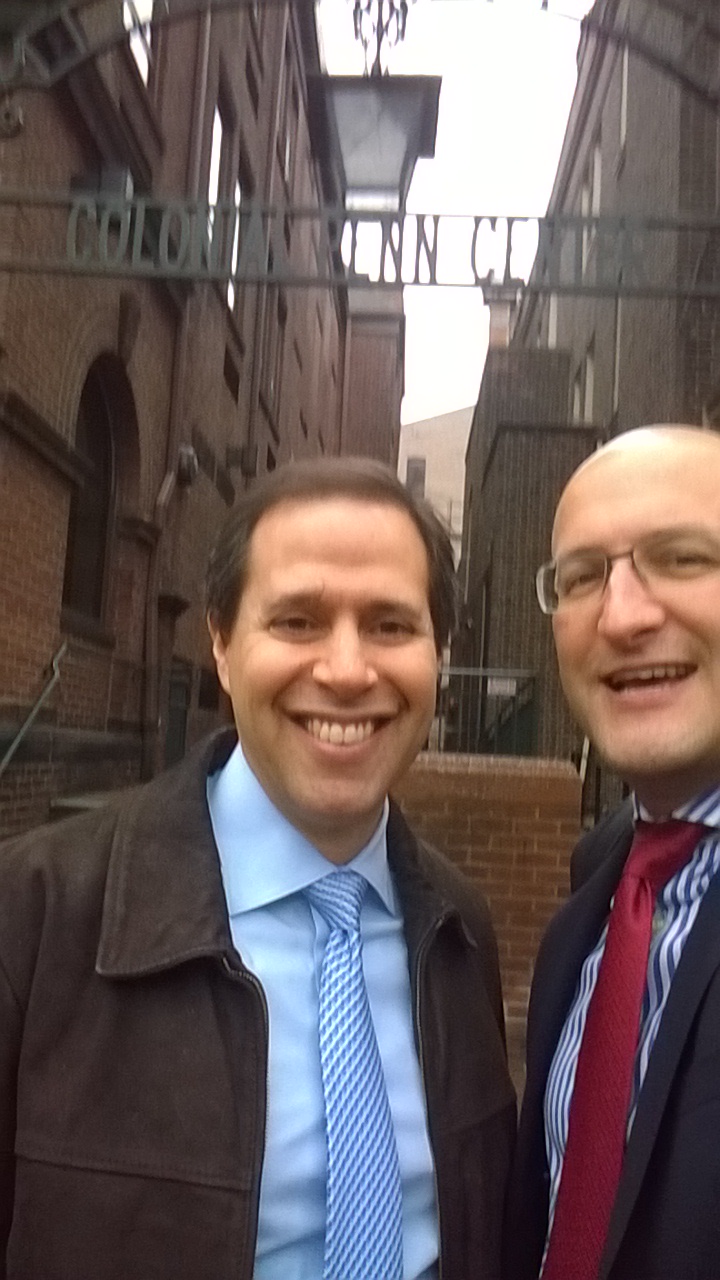
Meeting with Adam Pelavin, Comprisma in the foyer of the Westin Hotel, Georgetown.

Adam is pure mathematician, sci-fi fantasy writer and is know to, and associated with Esther Dyson.

Comprisma was a self-funded health insurance regulation startup associated with the affordable care act whereby insurers were no longer able to make more than 20% margin (i.e. medical loss ratio > 80%) on their books. This unintentionally created a market for high cost members and an opportunity to pool and trade their risk to insurers operating with more than 20% margin, thereby making them conformant with the new policy – in effect, a cap and trade system for health insurance risk. This required fancy mathematics associated with combinatorial optimisation (software used was called CPLEX).

A very interesting insight that Adam shared with me was the need for the business to build out short- and long-term yield curves so as to bridge the cashflow gap that existed between the short and long-term incentives. i.e. start off with getting rid of low value care which would generate more immediate returns, but then top up with more strategic prevention based interventions associated with longer term revenues.

It was also important that the populations being considered were of a manageable size such that community focused interventions could be attributed to desired outcomes. In an interesting way, this means that remote Australian communities could present ideal opportunities for this idea to be deployed to.

Adam also referenced Jeremy Store (UK/US) who is looking at bundling wound care with social impact bonds.

Adam also mentioned Mikey Dickerson, US Digital Services Administrator and the guy who fixed healthcare.gov when it broke in 2014.

Key questions from Adam to me:
1. How much is a life-year worth to life insurers?
2. What kind of interventions are they interested in?

Follow up email:

Hi Paul,

It was a pleasure meeting you as well! It’s a rare pleasure to meet someone else who’s really trying to shift the financial incentives surrounding health. I’m fascinated by your life insurance approach; I’d love to learn more at some point about what life insurers’ incentives look like (i.e. how much a life-year is worth to them), what kind of interventions they might be interested in, etc.–and just to know how your thinking evolves. Please do keep in touch!

Best,

Adam

On Tue, Apr 14, 2015 at 9:34 AM, Paul Nicolarakis <paul.nicolarakis@loricahealth.com> wrote:
Hi Adam,
Thank you for meeting up yesterday. It was great to connect a bunch of dots, but also learn of your literary ambitions.
The story of Comprisma was very informative to the focus of my fellowship and I look forward to remaining in touch as the journey continues.
In particular, I found the discussion regarding the financing of healthcare (and/or prevention) for defined communities interesting as it relates to care provided to remote communities in Australia.
I am hoping to meet with Esther in two weeks and will be sure to reference our conversation at the time.
All the best for the novel and I look forward to remaining in touch on the health financial side.
Regards, Paul

WP_20150413_004

Meeting with Lynn Etheridge – Rapid Learning Health Systems

Met with Lynn over lunch at RIS (tomato cream soup, salmon) on the back of his with with Robert Wood Johnson Foundation on the establishment of a rapid learning health system.

US Secretary of Health Burwell is moving payments to:

  • 35% alternate (non-FFS) payments
  • 80% of FFS will now be performance based
  • $10B innovation center

There are financiers looking to establish markets for healthcare futures

US is establishing a clinical research system that links NIH, FDA and POCARI databases covering 50 million patients.

Lee Hood at University of Washington is driving ideas around zero stage disease and prediction >> feeding into P4 Medicine Group

Flatiron Health are building a unified cancer EMR

End goal is to have 100% of patients involved in a clinical trial – this is the essence of a rapid learning health system

Meeting at National Health Care Anti-Fraud Association

Met with Lou Saccoccio (CEO) and Erin Carlson (Snr Director, Education and Training).

Excellent discussion regarding approaches taken to collaboration and partnership against fraud in US health care.

NHCAA are a small (12 FTEs) government and industry funded group (85 members) established in 1985 that supports a range of collaborative and educational programs including certification of fraud investigators – Accredited Health Care Fraud Investigator (AHFI) and Annual Training Conference.

Bupa are involved, mostly out of UK but also Australia (Michael Douman).

Ray Collins is very active in the space.

  • SIRIS is an information sharing/case management data base hosted by LexisNexis – contract regarding use to be forwarded. Sharing this information is legal provided it is performed according to strict guidelines and relates specifically to fraud investigation. It cannot be a fishing exercise. Cases must be built on own information, but having the database allows investigators to follow up with other investigators looking at a specific concern.
  • A number of firms provide a recoveries service offering – Verisk, Emdeon, LexisNexis – the standard charge is 30% commission on recoveries made.
  • Case discussion roundtable meetings support information sharing around specific cases.
  • Discussed the 7:1 ROI enjoyed by federal programs – much of this is returned by cases focused on recovering monies from “Pharmaceutical Off-label Marketing Fraud” and “Pharmaceutical Best Pricing Fraud” which then boosts overall figures.
  • Other approaches include cross-matching for recently deceased providers (phantom providers) who continue to bill. When this practice becomes endemic in a region, moratoria are established that prevent new providers being registered in that region.
  • Also look at “high cost pharmacies”, perform site visits and follow up on outliers on risk scoring.
  • MITRE Corporation (originally a military technology R&D organisation akin to RAND) are now collaborating with CMS in a program called CMS Alliance to Modernize Healthcare. Thier operating model involves partnership with government agencies on a sole source basis. IP can be captured by MITRE and then commercialised as required.
  • All Claims Pooling is another approach using trusted third parties – Verisk, Emdeon and LexisNexis.
  • Federally-granted Recovery Audit Contracts see third parties (e.g. Performant) chase potential recoveries from providers – not appreciated by providers.
  • Palantir had previously engaged with NHCAA but had since withdrawn. They have a contract with Aetna, but no one else in health was mentioned. Government entities tended to work solely with MITRE.
  • NHCAA saw much opportunity to extend scope from fraud to low value care – clinical special investigation units are involved in this work, typically headed by MDs and they meet at the annual conference.
  • Suggested engaging with CMS Head Dr Shantanu Agrawal who I am meeting on Wednesday.

Actions

  • Erin: refer me to Allanna Lovell at MITRE for a meeting
  • Erin: invite to anti-fraud conference in November
  • Erin: share guidelines for intelligence sharing

Linked and  attached are presentations by Shantanu Agrawal  and his staff on the CMS (Centers for Medicare & Medicaid Services) scoring system they are using, as well as their latest anti-fraud initiatives.


Meeting with Steve Shihadeh, VP Sales at Caradigm

Met with Steve Shihadeh.

Was taken for a personal tour and lunch at the simply extraordinary Barnes Foundation gallery where Steve and his wife are members.

Discussed how population health management was the big buzz at this year’s HIMSS Conference in Chicago and that Caradigm was right in the middle of this buzz.

Steve would endeavour to connect me up with people in Caradigm HQ in Bellevue.

WP_20150410_003

Leonard David Institute in Health Economics at Wharton, University of Pennsylvania

Met over breakfast with Prof Daniel Polsky, Prof Kevin Volpp, A/Prof Peter Groeneveld, and Dr Amol  Navathe.

Described fellowship and the themes being explored.

Discussed machine learning loop concept.

Discussed application of behavioural economics in modification of patient (smoking, healthy food, texting while driving) and clinician behaviour.

Dan and Kevin mentioned recent announcements by John Hancock (insurer) and Vitality. Also, innovations with Kroger (supermarket chain).

Dan indicated that they had applied for a grant in big data on the back of previous discussions had between LDI and CMCRC and would be interested in formally collaborating on those projects if they were funded.

Dan recommended a meeting with Curtis Lane in NYC – private equity investments focused on healthcare savings.

Also suggested I attend a presentation by Patrick Conway from CMS Centre for Innovation (but was not available).

Follow up with a second meeting to explore opportunities to collaborate on my return to Philadelphia.

WP_20150410_001

Fruit and Veg gets a marketing kick… almost

This new campaign almost cuts it for a competent, directionally-correct response to the onslaught of high impact marketing unleashed on the community by the processed food industry.

From: RWJF Blog Post

If Victor Cruz Tells Us to Eat Our Veggies, Will Kids Listen?

Apr 8, 2015, 9:30 AM, Posted by John R. Lumpkin

The Robert Wood Johnson Foundation is proud to be a part of the new FNV campaign, using lessons from the marketing industry to make the healthy choice the easy and cool choice by promoting fruits and vegetables.

As my colleague Alonzo Plough recently pointed out, food and beverage marketing to kids is a big deal. Companies spend billions of dollars a year on advertising to reach young people everywhere they are: watching TV, playing digital games and using apps, and connecting to friends and family on social media―the ways to catch their attention seem to grow day by day.

Companies spend billions of dollars because marketing works. Ads can influence the foods and beverages childrenprefer, purchase, and consume. Even parents can have a hard time seeing through marketing.

That’s why I’m so excited about the launch of FNV.

I was recently at the Partnership for a Healthier America Summit where FNV (which stands for fruits and vegetables) was unveiled—a campaign to put the same promotional muscle behind fruits and veggies as other companies put behind soda, candy, and potato chips.

This video sums it up. New York Giants’ Victor Cruz (a New Jersey native, I might add) is all for apples and tomatoes. Nick Jonas is pushing plums. And Jessica Alba is crazy over beets. All for #TeamFNV. There will be billboards, and hats, and t-shirts. And edgy messages designed to appeal to tweens’ and teens’ instincts to challenge authority and convention.

This reflects a real turning point as we realize that we must apply the best and most creative strategies from the advertising and marketing world to healthier choices. The ads for carrots should be more enticing than the ads for cookies and candy bars. Yes, root for carrots!

The Robert Wood Johnson Foundation is excited to be supporting both the initial launch and an evaluation of FNV’s impact. The campaign is launching nationally and later this spring rolling out in Fresno, California, and Hampton Roads, Virginia, two markets where obesity rates remain high and comprehensive approaches to reversing the epidemic are needed.

Making healthy foods and beverages the affordable, available, and desired choice in all neighborhoods and communities is part of RWJF’s commitment to helping all kids grow up at a healthy weight, no matter who they are or where they live. And it’s absolutely essential to building a Culture of Health. Giving voice to consumer demand for healthy alternatives is a critical part of that process.

Because companies respond to consumer demand. Last month, Burger King became the third of the big three burger chains to take soda off its kid’s menus. Pretty soon, when a parent takes their son or daughter into a McDonald’s, Wendy’s, or Burger King, they’ll see milk, juice, or water on the menu, not soda. That’s another great example of what can happen when we start to demand healthier choices for ourselves and our families.

I was thinking of FNV and these other recent market shifts because this week is National Public Health Week, and today’s theme is “Building Momentum.” I look around and I see a lot of momentum. Soda is leaving kids’ menus, calories are coming off of store shelves, and the healthy choice is getting the potent marketing push. I’m excited about what’s to come.